How to Clean Makeup Brushes & Sponges (+ Best Shampoos & Hacks)
Here’s a scary fact: 90% of used makeup sponges have bad germs on them. These germs include E. coli そして Staphylococcus. That’s the same stuff that makes you sick!
Think about it. You put makeup on your face every day. But when did you last clean your brushes? If you’re like most people, it’s been way too long.
Studies show that 72% of makeup users clean their brushes less than once a month. That’s gross. And it’s hurting your skin.
Why Your Dirty Brushes Are Ruining Everything
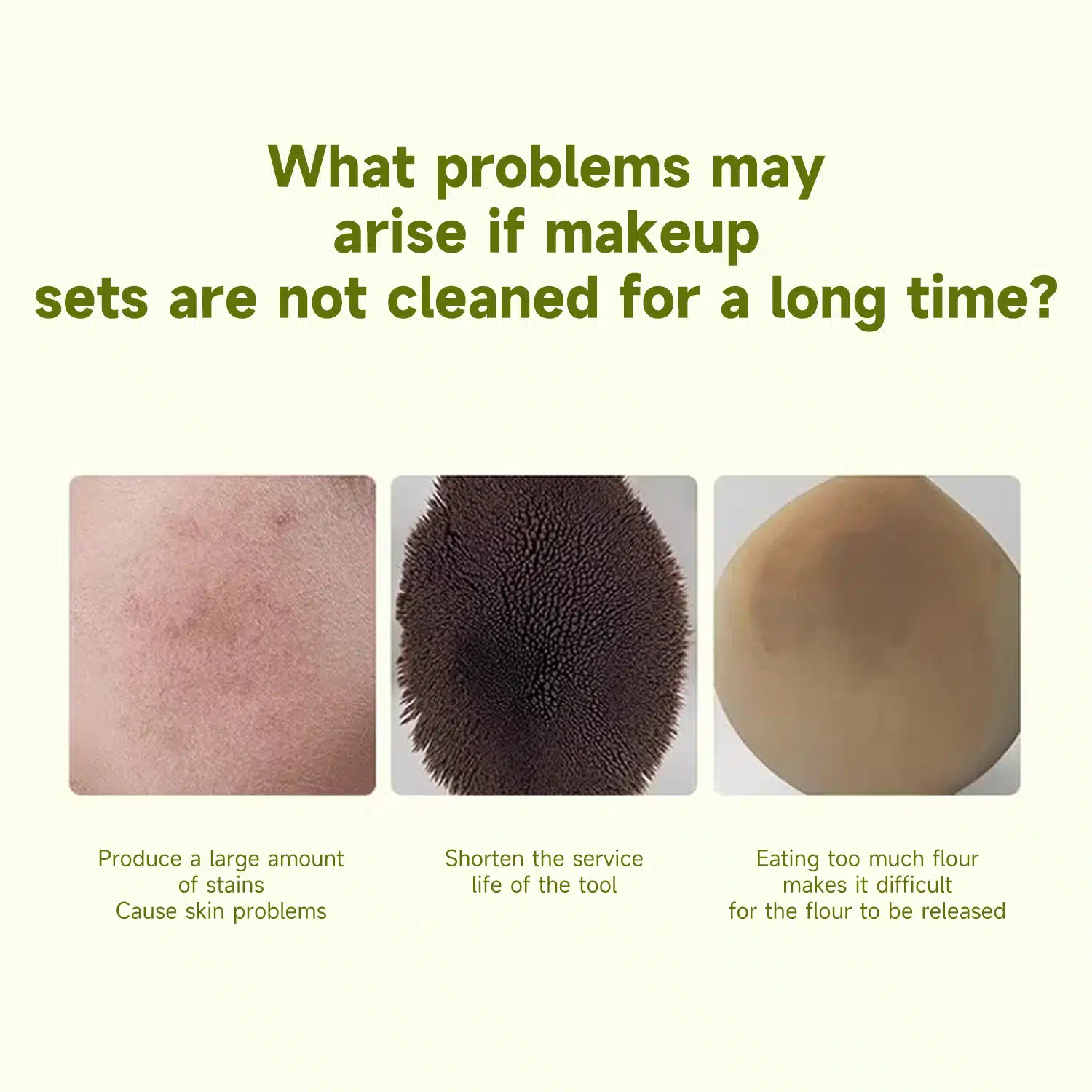
Dirty makeup tools don’t just look bad. They cause real problems:
Health Problems
- Acne breakouts from old makeup and germs
- Skin infections that hurt and look ugly
- Rashes that make your face red and bumpy
- Eye infections from dirty eye brushes
Bad Makeup
- Streaky foundation that looks patchy
- Muddy colors when old makeup mixes with new
- Poor coverage because brushes don’t work right
- Wasted money on makeup that looks terrible
Here’s what really hurts: Dirty brushes die fast. Clean brushes last 2.5 times longer than dirty ones. That means you’re throwing money away every time you skip cleaning.
The math is simple: A good brush costs $30. If you don’t clean it, you’ll need a new one in 6 months. That’s $60 per year. But if you clean it right, it lasts 18 months. You save $40!
Let’s talk money. Bad cleaning habits cost you in three ways:
- New brushes – You buy them more often
- Bad makeup – Your look suffers
- Skin problems – Doctor visits and treatments
The makeup brush cleaner market is worth $312 million. Why? Because smart people know clean tools work better.
But here’s the problem: Most people clean brushes wrong.
Types of Makeup Brush Sponge Shampoo
Not all cleaners work the same. Here are your choices:
Liquid Shampoos
- Best for: Daily spot cleaning
- Good: Easy to use, works fast
- Bad: Can run out quick
Solid Bars
- Best for: Deep cleaning once a week
- Good: Lasts long, travels well
- Bad: Takes more time
Spray Sanitizers
- Best for: Quick fixes between uses
- Good: Super fast, kills germs
- Bad: Doesn’t remove makeup buildup
How to Pick the Right Shampoo
Not all shampoos work for makeup tools. Here’s what to look for:
良い成分だ:
- pHバランス formulas (gentle on bristles)
- Antibacterial agents (kill germs)
- Natural oils (keep bristles soft)
- ヴィーガン ingredients (68% of users want this)
Bad Ingredients to Avoid:
- 硫酸塩 (dry out natural hair)
- High alcohol (makes bristles brittle)
- Strong fragrances (irritate skin)
- Harsh detergents (break down glue)
Step-by-Step Cleaning Guide for Brushes
Follow these steps for perfect clean brushes every time:
What You Need:
- Quality makeup brush sponge shampoo
- Silicone scrubber (like BrushEgg)
- Clean towel
- Running water
The Process:
ステップ1: Wet brush bristles with warm water. Don’t get the metal ferrule wet.
ステップ2: Put a drop of antibacterial brush shampoo in your palm.
ステップ3: Swirl brush gently in the shampoo. Watch the dirty makeup come out.
ステップ4: Use your silicone scrubber to work out stubborn makeup. This cuts drying time by 50%.
ステップ5: Rinse until water runs clear. No soap left behind.
Step 6: Squeeze out extra water with a clean towel.
Step 7: Lay brushes flat to dry. Point bristles down so water doesn’t get in the ferrule.
Step-by-Step Guide for Sponges
Sponges need different care than brushes. Here’s how:
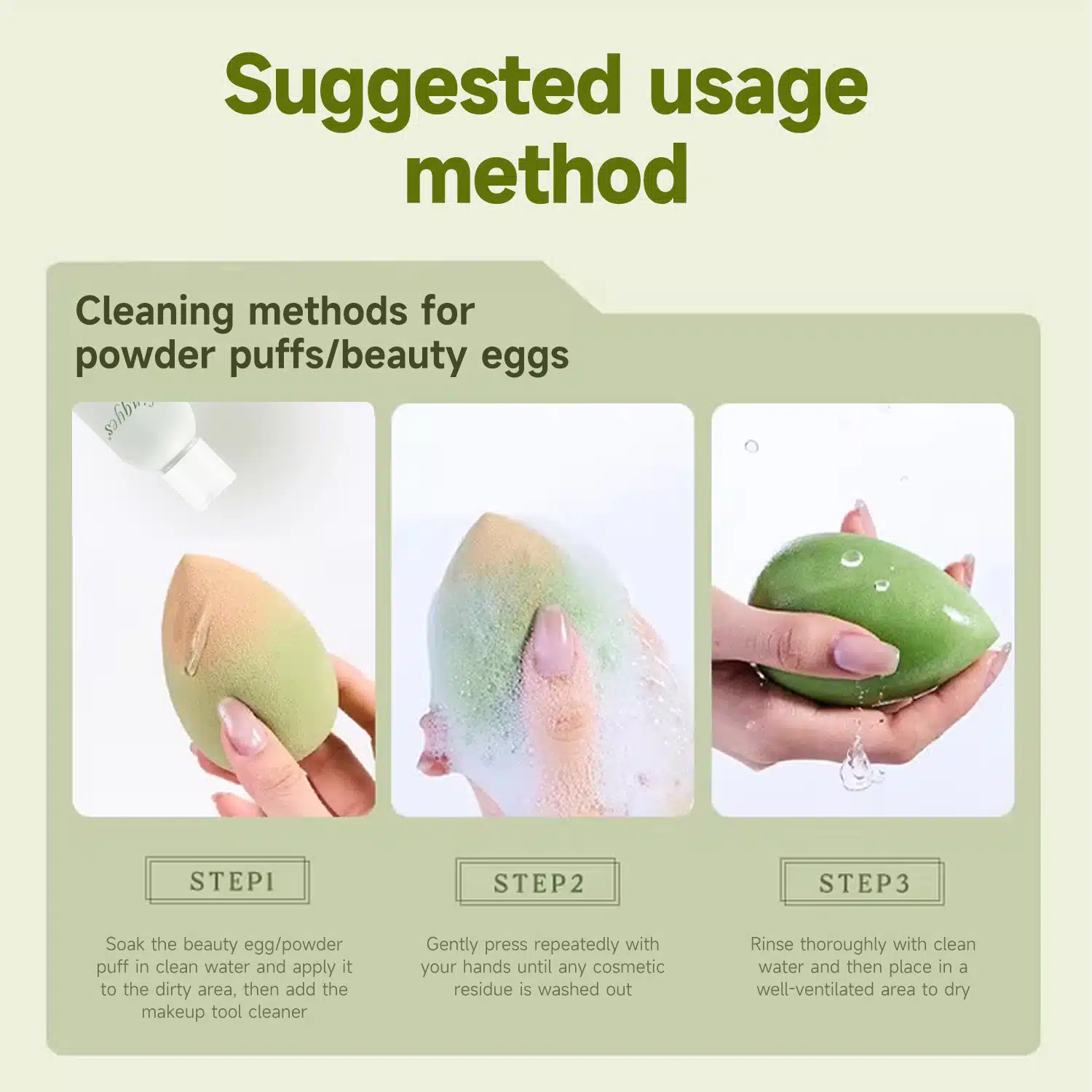
The Beautyblender Method:
ステップ1: Wet your ビューティースポンジ ぬるま湯で。
ステップ2: 追加 silicone-free cleanser to the sponge.
ステップ3: Squeeze the sponge 10-15 times. Watch the makeup come out.
ステップ4: Rinse until water runs clear.
ステップ5: Squeeze out extra water.
Step 6: Let it air dry completely.
プロのアドバイス について microwave hack kills 99.9% of germs in 30 seconds. Put your damp, clean sponge in the microwave for 30 seconds. Be careful – it will be hot!
Don’t make these costly errors:
Mistake 1: Using Dish Soap
Why it’s bad: Dish soap like Dawn strips natural oils from brush bristles. It changes the pH and makes brushes hard and scratchy.
Better choice: 用途 pHバランス makeup brush cleaner instead.
Mistake 2: Washing Too Much
Natural hair brushes can get brittle if you wash them every day.
Smart schedule:
- Spot clean after each use with spray
- Deep clean once a week with shampoo
Mistake 3: Wrong Drying
Never dry brushes standing up. Water gets in the ferrule and loosens the glue.
Right way: Lay flat or hang bristles down.
Mistake 4: Skipping Deep Cleans
Spot cleaning removes surface makeup. But you need weekly deep cleans to kill germs and remove buildup.
Top 5 Makeup Brush Sponge Shampoos Compared
| 製品 | タイプ | 最適 | 価格 | Rating | Key Benefit |
|---|
| Cinema Secrets Brush Cleaner | 液体 | Fast cleaning | $24 | 4.8/5 | Removes 95% bacteria |
| Beautyblender Blendercleanser | ソリッド | Sponges | $18 | 4.7/5 | Extends sponge life 6+ months |
| EcoTools Makeup Brush Shampoo | 液体 | Eco-friendly | $6 | 4.6/5 | ヴィーガン, budget pick |
| Zote Soap | Solid bar | DIY cleaning | $2 | 4.5/5 | Viral TikTok hack |
| Johnson’s Baby Shampoo | 液体 | 敏感肌 | $4 | 4.3/5 | Gentle but cleans 34% less bacteria |
Our Top Pick: Cinema Secrets
Why we love it: これは antibacterial brush shampoo works fast and kills 95% of germs. Pro makeup artists use it because it dries quick and smells good.
The downside: It costs more than drugstore options.
Perfect for: People who want ビーガン そして 無農薬 products without spending much.
Why it works: これは silicone-free cleanser is gentle but effective. It won’t break the bank.
Viral TikTok Hack: Zote Soap
The buzz: This $2 solid cleanser went viral because it removes makeup like magic.
The truth: It works great for removing oils and makeup. But it can dry out natural hair brushes if used too much.
プロのアドバイスだ: Use it for synthetic brushes only.
Maintenance and Storage Hacks
Make your tools last longer with these smart tips:
DIY Drying Rack
What you need:
- Hair ties or rubber bands
- A drawer or box
- Bamboo chopsticks
How to make it:
- Stretch hair ties across an open drawer
- Slide chopsticks through the ties
- Hang brush handles on the chopsticks
- Bristles point down for perfect drying
Storage Solutions
Antimicrobial storage bags from brands like Spectrum Collections keep clean brushes germ-free.
DIY option: Use a clean makeup bag with a few drops of tea tree oil on a cotton ball.
Revive Hard Sponges
問題だ: あなたの ビューティースポンジ got hard after cleaning?
解決策 Mix olive oil with makeup brush sponge shampoo. Soak the sponge for 10 minutes. This works 78% of the time.
How Often Should You Clean?
Different tools need different schedules:
Foundation Brushes
- Spot clean: After every use
- Deep clean: Twice a week
Eye Brushes
- Spot clean: After each color change
- Deep clean: Once a week
Beauty Sponges
- Deep clean: After every 3 uses (max)
- Replace: Every 3 months
Powder Brushes
- Spot clean: ウィークリー
- Deep clean: Every 2 weeks
FAQ: Your Top Questions Answered
Can I use Dawn dish soap on my brushes?
No. Dawn and other dish soaps are too harsh. They strip natural oils and change the pH of your brushes. This makes them hard and scratchy. Use pHバランス makeup cleaners instead.
How often should I wash makeup sponges?
Every 3 uses maximum. Beauty sponges hold more water and germs than brushes. The 応用微生物学雑誌 found that 90% of used sponges have harmful bacteria.
Does baby shampoo work for cleaning brushes?
Sort of. Johnson’s Baby Shampoo is gentle and won’t hurt your brushes. But studies show it cleans 34% less bacteria than specialized brush shampoos. It’s okay for sensitive skin, but not the best for killing germs.
Why do my brushes feel hard after cleaning?
You’re using the wrong cleaner. Harsh soaps strip natural oils from brush bristles. Switch to a silicone-free cleanser made for makeup brushes.
Can I speed up drying time?
そうだ! を使用する。 silicone scrubber のように BrushEgg when cleaning. This removes more water and cuts drying time by 50%. Also, make sure to squeeze out extra water with a clean towel.
What’s the difference between spot cleaning and deep cleaning?
Spot cleaning removes surface makeup with spray or wipes. Deep cleaning 用途 antibacterial brush shampoo to kill germs and remove buildup. You need both for healthy tools.
Here’s what we learned:
- Dirty tools make you sick – 90% have harmful germs
- Clean brushes last 2.5 times longer – You save money
- The right shampoo matters – Baby soap isn’t enough
- Regular cleaning is key – Weekly deep cleans prevent problems
- Simple hacks work – DIY solutions save time and money
The makeup industry knows this. That’s why the brush cleaner market is worth $312 million and growing 5.2% each year.
Smart makeup users invest in good makeup brush sponge shampoo. They know that clean tools make better makeup and save money.
Your choice is simple: Keep using dirty brushes and deal with bad makeup and skin problems. Or start cleaning right and enjoy better looks, healthier skin, and tools that last longer.
The best time to start cleaning your brushes right was yesterday. The second best time is right now.
Get a good antibacterial brush shampoo, follow our ステップ・バイ・ステップ・ガイド, and watch your makeup game improve. Your skin will thank you. Your wallet will thank you. And your makeup will look better than ever.
覚えておいてほしい: Clean tools aren’t just about looking good. They’re about feeling confident, staying healthy, and getting the most from every dollar you spend on makeup.
Start today. Your future self will be glad you did.


 English
  German
 Russian
 Spanish
 Korean
 French
 Japanese