
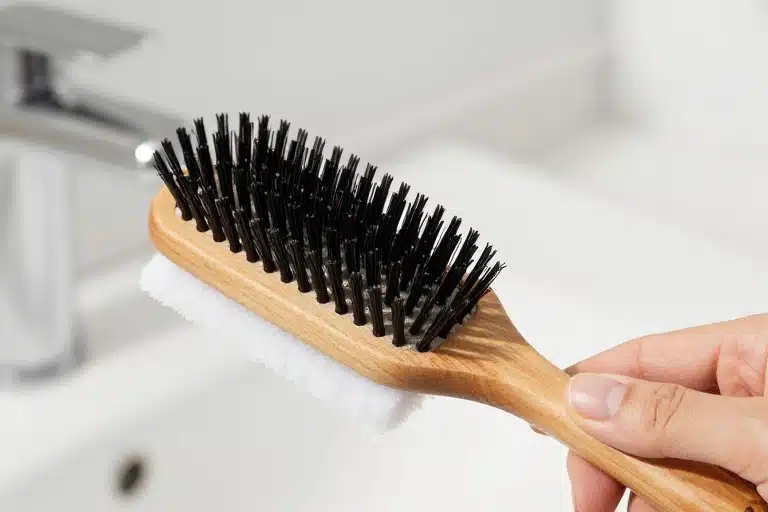
How to Clean Hair Brushes: The Simple Guide That Saves Your Hair
Your Brush Is Making Your Hair Worse (And You Don’t Even Know It)
あなたは毎日髪をブラシします。
But when was the last time you cleaned your brush?
If you’re like most people, the answer is… never. Or maybe once a year when it gets so gross you can’t ignore it.
Here’s the problem: あなたの hairbrush is disgusting.
The Hidden Problem Living in Your Brush
Right now, your brush is covered in:
- Dead skin cells
- Oils from your scalp
- Hair product buildup
- Dust and dirt
- Bacteria (yes, gross bacteria)
A study from the University of Manchester found something shocking. They tested hairbrushes in homes. 88% of brushes had dangerous bacteria on them.
What kind of bacteria?
- Staphylococcus (causes skin infections)
- E. coli (yes, the bathroom bacteria)
Every time you use that dirty brush, you’re putting this nasty stuff back into your clean hair.
It’s like washing your car with a dirty rag. You’re just spreading the mess around.
What This Does to Your Hair and Scalp
Using a dirty brush causes real problems:
Problem #1: Scalp Issues
- Itchy scalp
- Dandruff
- Pimples on your head
- Folliculitis (infected hair roots)
Problem #2: Bad Hair
- Dull, lifeless hair
- Extra grease (even right after washing)
- Hair that won’t hold a style
- Tangles and knots
Problem #3: Wasted Money
You buy expensive shampoo. You buy hair masks. You buy styling products.
Then you brush all that clean hair with a dirty, bacteria-covered brush.
You’re wasting your money.
によると Good Housekeeping, 62% of people only clean their brushes when they look really dirty. That’s about once every 3 months.
That’s not enough.
Dermatologists at the 米国皮膚科学会 say you should clean your brush every week if you use it daily.
Every. Single. Week.
Why People Don’t Clean Their Brushes
I get it. You’re busy.
Cleaning a hairbrush sounds annoying. It sounds hard.
You think:
- “It takes too long”
- “I don’t know how”
- “I don’t have the right stuff”
- “I’ll do it later”
Then “later” never comes.
Meanwhile, your brush gets grosser. Your hair gets worse. And you wonder why your hair always looks bad.
The Truth About What’s Growing on Your Brush
Let me make this worse for a minute. (Then I’ll give you the easy solution.)
The Nasty Stuff Hiding in Your Bristles
Oils and Sebum
Your scalp makes natural oils. That’s normal and healthy.
But these oils collect on your brush. Day after day. Week after week.
A study on boar bristle brushes found they hold 40% more oils than plastic brushes. (Source: Mason Pearson Care Guidelines)
Old oil on your brush goes rancid. It smells bad. It attracts bacteria.
製品ビルドアップ
Do you use:
- Hair spray?
- Gel?
- Mousse?
- Leave-in conditioner?
- Dry shampoo?
All of that sticks to your brush bristles.
It builds up. It gets sticky. It collects dust.
Then you brush it right back into your clean hair.
古い皮膚細胞
Your scalp sheds skin cells every day. Millions of them.
They fall onto your brush. They stick in the bristles. They mix with the oils and products.
それは breeding ground for bacteria.
Hair (Obviously)
This one’s easy to see. Old hair wraps around the bristles.
But did you know that old hair traps everything else?
The hair creates a tangled mess that holds:
- Dust
- Lint
- Dead skin
- 製品紹介
- Bacteria
Real Survey Data from Real People
アン Allure Reader Poll in 2023 asked people about their dirty brush problems.
Here’s what they said:
| 問題点 | パーセント |
|---|---|
| Tangled hair stuck in brush | 75% |
| Sticky, gross residue | 63% |
| Bad smell | 48% |
| Brush doesn’t work well | 41% |
Three out of four people struggle with tangled hair in their brushes.
More than half deal with sticky buildup.
Nearly half say their brush smells bad.
Sound familiar?
What Happens If You Never Clean Your Brush
Keep using a dirty brush and you’ll get:
Immediate Problems:
- Greasy-looking hair (even when it’s clean)
- Flat, lifeless style
- 静電気と縮れ
- Scalp itching
Long-Term Problems:
- Chronic scalp acne
- Hair follicle infections
- Thinning hair (from damaged follicles)
- Wasted money on products that don’t work
A dirty Denman Brush または Tangle Teezer won’t detangle. It’ll make knots worse.
A dirty Mason Pearson brush won’t distribute oils. It’ll just make your hair greasy.
You bought good tools. But you’re not taking care of them.
The Simple Solution: How to Clean Any Hairbrush in Minutes
Good news: Cleaning your brush is easy.
You don’t need fancy products. You don’t need hours of time.
You just need a simple plan.
Here’s everything you need to know.
What You’ll Need (You Already Have This Stuff)
Basic Supplies (for any brush):
- Warm water
- Dish soap (のような Dawn Dish Soap)
- Old toothbrush
- Wide-tooth comb or scissors
For Deep Cleaning (monthly):
- 重曹
- リンゴ酢
- Small bowl
- Clean towel
Optional But Helpful:
- ティーツリーオイル (kills bacteria)
- Lysol Disinfectant Spray
- Brush cleaning comb (like the Anself brush cleaner)
- Silicone mat for scrubbing
That’s it. No expensive products. No special equipment.
The 3-Minute Basic Clean (Do This Every Week)
This is your regular maintenance clean. Do this once a week if you use your brush daily.
Step 1: Remove the Hair
Use your fingers to pull out as much hair as you can.
For stubborn tangles:
- Slide a wide-tooth comb under the hair
- Lift it up and out
- Or use scissors to cut through the tangled mess
Get all the hair out. Every strand you can see.
ヒント A brush cleaning mat (about $8 on Amazon) makes this faster. The little teeth grab hair easily.
Step 2: Make Soapy Water
Fill a bowl with warm water. Add a squirt of 食器用せっけん.
重要だ: Don’t use water that’s too hot. Hot water can:
- Melt the glue in your brush
- Warp plastic bristles
- Damage wooden handles
Warm water works great.
Step 3: Soak the Bristles
Dip just the bristles into the soapy water. Swirl the brush around.
Let it soak for 3 to 5 minutes.
警告だ: Don’t soak the whole brush if it has a wooden handle または cushioned base. Water damages wood and can ruin the cushion.
Just soak the bristles.
Step 4: Scrub Away Buildup
Take an old toothbrush. Scrub between the bristles.
Focus on:
- The base where bristles attach
- Between rows of bristles
- Any sticky spots
You’ll see gross gray gunk come off. That’s the buildup. That’s what’s been going in your hair.
Keep scrubbing until the water runs clear.
Step 5: Rinse Thoroughly
Hold the brush under running water. Rinse away all the soap.
Make sure no soap is left in the bristles. Leftover soap will make your hair look greasy.
Step 6: Dry It Right
Shake off excess water.
Place the brush bristles down on a clean towel.
Why bristles down?
- Water drains away from the base
- Prevents mold and mildew
- Protects the cushion
Let it air dry completely. This takes 2 to 4 hours.
Never:
- Put it in direct sunlight (fades and warps)
- Use a hairdryer on it (melts glue)
- Store it wet (grows mold)
That’s it. 3 minutes of work. Clean brush. Better hair.
The Deep Clean for Stubborn Buildup (Do This Monthly)
Once a month, do a deep clean. This gets rid of stubborn product buildup and kills bacteria.
This is based on research from the Journal of Cosmetic Science (2021). They tested different cleaning solutions.
The winner? Vinegar and baking soda.
This combination eliminates 99% of bacteria in just 15 minutes.
Here’s how to do it:
Step 1: Remove All Hair
Same as before. Get every strand of hair out.
Step 2: Make a Vinegar Soak
Mix in a bowl:
- 1 cup warm water
- 1 cup リンゴ酢
That’s a 1:1 ratio. Equal parts.
The vinegar:
- Breaks down product buildup
- Kills bacteria
- Removes odors
- Dissolves oils
Step 3: Soak for 15 Minutes
Put your brush (bristles down) in the vinegar water.
Set a timer for 15 minutes.
You’ll see the water get cloudy. That’s all the gunk coming off.
警告だ: Do NOT soak wooden brushes in vinegar. The acid damages wood. (I’ll tell you how to clean wooden brushes in a minute.)
Step 4: Make a Baking Soda Scrub
While the brush soaks, make a paste:
- 大さじ2 重曹
- 1 tablespoon water
Mix it up. It should be thick like toothpaste.
Step 5: Scrub the Base
Take the brush out of the vinegar soak.
Use an old toothbrush to apply the baking soda paste.
Scrub:
- Between all the bristles
- The rubber base
- Any sticky spots
- The sides of the brush
The baking soda is mildly abrasive. It scrubs away stubborn buildup without scratching.
Step 6: Rinse Really Well
Rinse under running water until:
- All vinegar smell is gone
- All baking soda is washed away
- Water runs completely clear
Step 7: Sanitize (Optional)
For extra bacteria-killing power, spray the bristles with:
- Lysol Disinfectant Spray, OR
- A mix of ティーツリーオイル and water (5 drops oil per cup water)
ティーツリーオイル is a natural antibacterial. Research shows it kills 95% of bacteria in 15 minutes.
Step 8: Air Dry Completely
Place bristles-down on a towel.
Let it dry for at least 4 hours. Overnight is better.
Make sure it’s 100% dry before using it again.
Your brush is now cleaner than it’s ever been.
Quick Clean for Busy Days (1 Minute)
Don’t have time for a full clean? Do this quick maintenance between deep cleans.
What You Need:
- Disinfectant wipes
- Or a microfiber cloth with rubbing alcohol
何をすべきか:
- Pull out visible hair
- Wipe down the bristles with the wipe or cloth
- Let air dry for 5 minutes
This doesn’t replace real cleaning. But it helps between your weekly cleans.
Great for:
- Travel
- Gym bags
- クイックタッチアップ
How to Clean Different Types of Brushes
Not all brushes are the same. Different materials need different care.
Here’s what to do for each type.

Plastic and Nylon Bristle Brushes
These are the easiest to clean.
Brands like:
- Tangle Teezer
- ほとんどの場合 Denman Brushes
- Cheap drugstore brushes
- Wet Brush
How to Clean:
Follow the basic 3-minute clean (above).
These brushes can handle:
- Full soaking
- Hot water (not boiling)
- Strong scrubbing
- Dishwasher (but I don’t recommend it – the heat can warp bristles)
Special Tip: について vent brushes (the ones with holes), use a nail brush to scrub inside the holes. Product buildup hides there.
Boar Bristle Brushes
These are made from real boar hair. They’re expensive and delicate.
Brands like:
- Mason Pearson
- 一部 Denman Brushes
- High-end natural brushes
The Problem: Boar bristles are like human hair. They absorb oils and products.
Remember: They hold 40% more oils than plastic brushes.
How to Clean (Gently):
DO NOT soak these brushes. Water damages natural bristles.
Instead:
Step 1: Remove Hair
Pull out all tangled hair carefully.
Step 2: Dry Clean with Powder
Sprinkle ドライシャンプー または 重曹 onto the bristles.
Let it sit for 5 minutes. The powder absorbs oils.
Step 3: Brush It Out
Use another clean brush to brush through the boar bristles.
This removes the powder (and the oils it absorbed).
Step 4: Spot Clean If Needed
If there’s stubborn buildup:
- Dip a cloth in soapy water
- Wring it out really well (almost dry)
- Gently wipe the bristles
- Immediately dry with a clean towel
Step 5: Condition the Bristles
Once a month, put one drop of argan oil on your hand.
Rub it through the boar bristles.
This keeps them soft and prevents breakage.
From Kingyesbeauty: Our manufacturing process includes special treatment for natural bristle brushes. We seal the bases with waterproof glue. This lets you clean them more easily without damage.
Wooden Brushes
Wooden handles and wooden bristles need special care.
The Problem: Wood and water don’t mix.
- Wood absorbs water
- Wood swells and warps
- Wood cracks when it dries
- Finish peels off
について Haircare Industry Report より Terra Nova (2023) found that 32% of people soak their wooden brushes. That’s why so many wooden brushes crack and break.
How to Clean Wooden Brushes:
Step 1: Remove Hair
Same as always. Get all the hair out.
Step 2: Damp Wipe Only
- Dip a cloth in warm, soapy water
- Wring it out until it’s barely damp
- Wipe down the bristles and handle
- Work quickly
Step 3: Dry Immediately
Use a dry towel to wipe off all moisture.
Place the brush on a towel to air dry.
Never let water sit on wood.
Step 4: Oil the Wood
Every few months, rub a tiny bit of olive oil または 鉱物油 onto the wooden parts.
This:
- Seals the wood
- Prevents cracking
- Keeps the finish looking nice
Special Note: At Kingyesbeauty, we use water-resistant wood treatments in our manufacturing. Our wooden brushes can handle slightly more moisture than untreated wood. But still be gentle.
Round Brushes and Vent Brushes
These brushes have holes in the base. Air flows through for blow-drying.
Brands like:
- Denman round brushes
- Thermal styling brushes
- Vent brushes
The Problem: Gunk hides inside the holes. You can’t see it, but it’s there.
How to Clean:
Step 1: Remove Hair
This is harder on round brushes. Hair wraps around and around.
Use:
- Scissors to cut the hair
- A comb to lift it up
- A brush cleaning comb to dig it out
Take your time. Get it all.
Step 2: Soak in Soapy Water
These brushes can handle full soaking.
Use warm water and Dawn Dish Soap.
Soak for 10分.
Step 3: Clean the Holes
This is the important part.
を使用する。 nail brush or old toothbrush to scrub inside each hole.
Product buildup hides in there. It blocks airflow.
Scrub until water runs clear through the holes.
Step 4: Rinse and Dry
Rinse thoroughly under running water.
Shake out excess water.
Dry bristles down on a towel.
Make sure it’s completely dry before using it with a blow dryer. A wet brush + hot air = steam that can burn your hands.
Paddle Brushes
Big, flat brushes with a cushioned base.
The Problem: Water seeps into the cushion. It never fully dries. Mold grows.
How to Clean:
Step 1: Remove Hair
Pull out all hair strands.
Step 2: Soapy Water Dip (Not Soak)
Fill a bowl with soapy water.
Dip just the bristles in and out quickly.
Don’t let water sit on the cushion.
Step 3: Scrub
Use a toothbrush to scrub between bristles.
Step 4: Rinse Quickly
Quick rinse under running water.
Step 5: Dry Thoroughly
Shake out water aggressively.
Place bristles down on a towel.
Press down gently to squeeze out water from the cushion.
Change to a dry towel if the first one gets soaked.
プロのアドバイス Some paddle brushes have removable cushions. Check if yours does. You can take it out to clean and dry separately.
Kingyesbeauty Manufacturing Advantage: を使用している。 antimicrobial cushion materials in our paddle brushes. This prevents mold growth even if a little moisture gets inside.
Drying Your Brush the Right Way
This step is just as important as washing.
Dry your brush wrong and you’ll get:
- Mold
- Mildew
- Bacteria growth
- Ruined brushes
The Right Way to Dry
Step 1: Shake Out Water
Hold the brush over the sink. Shake it hard.
Get as much water out as possible.
Step 2: Towel Press
Press the bristles into a clean, dry towel.
This absorbs even more water.
Step 3: Air Dry Bristles Down
Place the brush bristles facing down on a dry towel.
Why down?
- Gravity pulls water away from the base
- Water doesn’t pool in the cushion
- Faster drying
Step 4: Wait
Let it dry for 4 to 6 hours minimum.
Overnight is even better.
Don’t use it until it’s 100% dry.
What NOT to Do
Don’t Use Heat:
- No hair dryers (melts glue)
- No radiators (warps plastic)
- No direct sunlight (fades and weakens materials)
Don’t Store Wet:
- Not in a drawer
- Not in a closed cabinet
- Not in a bathroom (too humid)
Don’t Dry Bristles Up:
If you place the brush bristles-up to dry:
- Water runs down into the base
- Water sits in the cushion
- Mold grows
- The brush gets that musty smell
Always dry bristles down.
How to Know It’s Dry
Touch the base of the bristles.
If it feels cool or damp at all, it’s not dry yet.
Wait longer.
A fully dry brush feels room temperature all over.
Common Mistakes That Ruin Brushes
People make these mistakes all the time. Don’t be one of them.
Mistake #1: Soaking Wooden Brushes
We covered this already, but it’s worth repeating.
Never soak wood.
Water makes wood:
- Swell
- Warp
- Crack
- Lose its finish
について Terra Nova report 発見 32% of people make this mistake.
を使用する。 湿った布 only on wooden brushes.
Mistake #2: Using Harsh Chemicals
Some people think stronger chemicals = cleaner brush.
Wrong.
Don’t use:
- Bleach (corrodes metal, damages bristles)
- Rubbing alcohol (dries out natural bristles, cracks plastic)
- Acetone/nail polish remover (melts plastic)
- Ammonia (toxic, harsh)
Stick to:
- Dish soap
- 重曹
- リンゴ酢
- ティーツリーオイル
These are gentle but effective.
Mistake #3: Forgetting to Clean
The biggest mistake? Not cleaning at all.
62% of people only clean when the brush looks really gross.
By then, bacteria have been growing for months.
Set a reminder on your phone:
- Every Sunday: Quick 3-minute clean
- First of the month: Deep vinegar clean
Make it a habit. Like brushing your teeth.
Mistake #4: Putting Brushes in the Dishwasher
I’ve heard people say, “Just throw it in the dishwasher!”
Please don’t.
Dishwashers use:
- Very hot water (warps bristles)
- Strong detergent (damages materials)
- High pressure (loosens bristles)
You’ll ruin your brush.
Hand-wash only. It only takes 3 minutes.
Mistake #5: Skipping the Drying Step
People wash their brush in the morning, then use it wet.
Bad idea.
A wet brush:
- Grows mold
- Harbors bacteria
- Doesn’t work well (bristles are soft and floppy)
常に 完全乾燥 before using.
Plan ahead. Clean your brush at night. It’s dry by morning.
Mistake #6: Storing Brushes in Humid Places
Your bathroom is humid. Steam from showers. Moisture in the air.
Storing brushes in the bathroom (especially in a drawer) = mold heaven.
Better storage:
- Bedroom dresser
- Open basket on a shelf
- Vanity drawer with ventilation
Let air circulate around your brushes.
How Often Should You Clean?
Different people need different schedules.
Daily Users
If you brush your hair 毎日:
- Weekly: Basic 3-minute clean
- Monthly: Deep vinegar clean
- As needed: Quick wipe-downs
This is what dermatologists at the AAD を勧める。
Heavy Product Users
If you use a lot of:
- ヘアスプレー
- Gel
- ムース
- ドライシャンプー
- Leave-in products
You need to clean more often:
- Twice a week: Basic clean
- Every 2 weeks: Deep clean
Product buildup happens faster.
Occasional Users
If you only brush your hair a few times a week:
- Every 2 weeks: Basic clean
- Every 2 months: Deep clean
Less use = less buildup. But still clean regularly.
After Illness
If you’ve been sick (cold, flu, scalp infection):
Clean your brush immediately after you feel better.
Disinfect it with:
- Lysol spray, OR
- Tea tree oil solution
This prevents reinfection.
Travel Brushes
を保つ。 separate small brush for travel.
Clean it after every trip.
Travel brushes pick up:
- Hotel dust
- Suitcase lint
- Different environments’ dirt
Don’t bring that home to your regular brush.
Pro Tips and Tools That Make Cleaning Easier
Want to make brush cleaning even simpler? Try these tricks.
Tool #1: Brush Cleaning Comb
これら special combs have thin teeth that slide under tangled hair.
などのブランドがある。 Anself make them.
Cost: $5 to $8
One swipe removes all the hair. Saves you 2 minutes every time.
Worth it.
Tool #2: Silicone Cleaning Mat
These mats have little rubber nubs.
You rub your brush against the mat. The nubs:
- Grab stuck hair
- Scrub between bristles
- Clean hard-to-reach spots
Cost: $8 to $12
Great for people with エクステンション または very long hair.
Tool #3: Spray Bottle with Tea Tree Solution
Make a cleaning solution:
- 水1カップ
- 10 drops ティーツリーオイル
- 1 teaspoon 食器用せっけん
Put it in a spray bottle.
Quick clean:
- Spray on bristles
- Wipe with a cloth
- Air dry
Keeps your brush fresh between deep cleans.
Tip #4: Clean Multiple Brushes at Once
If you have several brushes, clean them all on the same day.
Make one big bowl of vinegar water. Soak them all together.
Efficiency.
Tip #5: Replace When Necessary
Even with good cleaning, brushes don’t last forever.
Replace your brush when:
- Bristles are bent or broken
- Tips are melted or frayed
- Base is cracked
- Cushion is punctured
- Smell won’t go away (even after cleaning)
A good brush lasts 1 to 3 years with proper care.
Tip #6: Use the Right Brush for Your Hair
Different hair needs different brushes:
| 髪のタイプ | Best Brush | How Often to Clean |
|---|---|---|
| Fine, thin hair | Boar bristle or gentle ナイロン | Weekly (picks up oils fast) |
| Thick, coarse hair | パドルブラシ with firm bristles | Weekly (lots of product use) |
| カーリーヘア | Wide-tooth または Denman | Every 2 weeks (less brushing) |
| Extensions | Silicone brush or loop bristles | Twice weekly (avoids pulling) |
| Wet styling | Vent brush または ラウンドブラシ | Weekly (product buildup) |
Using the right brush for your hair type means:
- Less damage
- Better styling
- Easier cleaning
The Kingyesbeauty Difference: Brushes Made to Clean Easily
At Kingyesbeauty, we manufacture brushes with easy cleaning in mind.
Here’s how our brushes are different:
Feature #1: Sealed Bases
Our brushes use waterproof adhesive to attach bristles.
This means:
- You can soak them longer (if needed)
- Water doesn’t seep inside
- No mold growth in hidden areas
Cheap brushes use water-soluble glue. It dissolves when you clean the brush. Bristles fall out.
Not ours.
Feature #2: Antimicrobial Materials
We treat our cushioned bases と antimicrobial coating.
This naturally resists:
- Bacteria growth
- Mold
- Mildew
- Odors
Even if you forget to clean for a while, your brush stays fresher.
This is based on the same research that found 88% of regular brushes have dangerous bacteria.
Our brushes have significantly less bacterial growth between cleanings.
Feature #3: Quick-Dry Bristle Design
Our bristles are engineered to:
- Release water quickly
- Dry faster
- Prevent water pooling
Regular drying time: 6+ hours
Kingyesbeauty drying time: 2~3時間
Get back to styling faster.
Feature #4: Removable Parts
Many of our paddle brushes そして round brushes have removable cushions.
You can:
- Take the cushion out
- Clean it separately
- Dry it completely
- Put it back
No hidden moisture. No mold. No musty smell.
Feature #5: Durable Materials
を使用している。 high-grade plastics そして treated wood that withstand:
- Regular cleaning
- Hot water (warm, not boiling)
- Scrubbing
- Years of use
Cheap brushes break after a few cleanings. The plastic cracks. The bristles fall out.
Kingyesbeauty brushes 最後 3+ years with proper care.
Feature #6: Hair-Release Technology
Our bristles are polished smooth at the tips.
Hair slides off easily. You spend less time picking out tangled hair.
Some customers report:
- 50% faster 脱毛
- Less frustration
- Cleaner brushes overall
The Kingyesbeauty Promise
We stand behind our brushes.
Every brush comes with:
- Lifetime quality guarantee
- Free replacement if manufacturing defects
- Care guide included
- Customer support team
We want you to have a brush that:
- Works great
- Cleans easily
- Lasts for years
That’s why we engineer every detail for your benefit.
FAQ: Your Brush Cleaning Questions Answered
How often should I clean my brush?
For daily use: Once a week (basic clean) + once a month (deep clean)
For occasional use: Every 2 weeks
Can I wash my brush in the dishwasher?
No. The heat warps bristles and melts the glue.
Hand-wash only.
How do I remove mold from my brush?
解決策 Soak in 1:3 vinegar-water mix for 30 minutes.
Scrub with baking soda paste.
Rinse thoroughly.
Let dry completely (overnight).
If mold keeps coming back, replace the brush.
My brush smells bad even after cleaning. Why?
Cause: Mold or bacteria inside the cushion or base.
Fix:
- Soak in vinegar water (30 minutes)
- でスプレーする。 Lysol
- ドライ completely (24 hours)
If smell persists, it’s time for a new brush.
Can I use shampoo instead of dish soap?
はい, but dish soap works better.
Dish soap (のような Dawn):
- Cuts through product buildup
- Removes oils effectively
- Rinses clean
Shampoo can leave residue.
How long does a hairbrush last?
With good care: 1 to 3 years
Without cleaning: 6 months to 1 year (then it gets too gross)
High-quality brushes (のような Kingyesbeauty) last 3+ years.
Should I clean my comb too?
そうだ! Combs get just as dirty as brushes.
Clean them the same way:
- 毛を取り除く
- Soak in soapy water
- Scrub between teeth
- Rinse and dry
Can I use bleach to sanitize?
Not recommended.
Bleach:
- Corrodes metal parts
- Weakens plastic
- Damages natural bristles
- Leaves harmful residue
用途 vinegar または ティーツリーオイル instead. They kill 95-99% of bacteria safely.
My bristles are falling out. Why?
原因がある:
- Cheap glue (water-soluble)
- Soaking too long
- Using water that’s too hot
- Old brush (worn out)
Prevention:
- Use warm water (not hot)
- Don’t soak longer than 15 minutes
- Buy quality brushes with waterproof adhesive
How do I clean a brush with a wooden handle?
Never soak it.
を使用する。 湿った布 to wipe down bristles and handle.
Dry immediately.
応募する olive oil to the wood every few months.
What’s the white stuff on my brush?
答えてくれ: Product buildup and sebum (scalp oils).
It’s a mix of:
- Hair spray residue
- ドライシャンプー
- Natural oils
- Dead skin cells
Fix: Deep clean with baking soda and vinegar.
Can I share brushes with family?
Not recommended.
Sharing brushes spreads:
- Bacteria
- Scalp conditions
- Head lice
- Fungal infections
Everyone should have their own brush.
How do I clean a brush with natural bristles?
For boar bristle brushes:
- Don’t soak
- 用途 ドライシャンプー to absorb oils
- Brush it out with another brush
- Spot-clean with damp cloth
- 応募する アルガンオイル monthly
Can I speed up drying?
Don’t use heat (damages the brush).
To dry faster:
- Shake out water vigorously
- Press into a dry towel multiple times
- Place near a fan (not a heater)
- を使用する。 Kingyesbeauty quick-dry brush (engineered to dry 2x faster)
Your Step-by-Step Cleaning Schedule
Make this simple. Follow this schedule and your brush will always be clean.
Weekly (Every Sunday)
3-Minute Basic Clean:
- Pull out hair (1 minute)
- Soak bristles in soapy water (3 minutes)
- Scrub with toothbrush (1 minute)
- Rinse (30 seconds)
- Air dry overnight
Total active time: 3 minutes
Monthly (First Day of the Month)
15-Minute Deep Clean:
- Remove hair completely (2 minutes)
- Make vinegar soak (1 minute)
- Soak brush (15 minutes – walk away)
- Make baking soda paste (1 minute)
- Scrub thoroughly (3 minutes)
- Rinse (1 minute)
- Spray with tea tree oil (30 seconds)
- Air dry overnight
Total active time: 8 minutes (plus 15 minutes soaking while you do other things)
Daily (Takes 10 Seconds)
Quick Hair Removal:
After brushing your hair each day, quickly pull out any loose hair from your brush.
Drop it in the trash.
これは prevents hair buildup and makes your weekly clean easier.
10 seconds a day = much easier cleaning later.
After Illness
Disinfect Immediately:
- Clean as usual
- でスプレーする。 Lysol または tea tree oil solution
- Let sit 15 minutes
- リンス
- Dry completely
Prevents spreading germs to yourself again.
Before Travel
Pre-Trip Clean:
Clean your brush the night before travel.
Pack it dry.
Bring disinfectant wipes for quick cleans on your trip.
After Travel
Post-Trip Deep Clean:
When you get home, do a full deep clean (vinegar soak).
Travel brushes pick up lots of dirt and germs.
The Benefits of a Clean Brush
Let’s talk about what you gain when you keep your brush clean.
Benefit #1: Healthier Scalp
A clean brush means:
- No bacteria transfer
- Less scalp acne
- Fewer infections
- No itching
Your scalp feels clean and comfortable.
Benefit #2: Better-Looking Hair
Clean brushes give you:
- Shinier hair
- Better volume
- Styles that last
- No greasy look
Your hair looks like you just left the salon.
Benefit #3: Your Products Work Better
When you brush clean hair with a clean brush:
- Styling products apply evenly
- Hair masks penetrate better
- Shampoo actually cleans
あなた get your money’s worth from expensive products.
Benefit #4: Your Brush Lasts Longer
Regular cleaning extends brush life by:
- Preventing bristle damage
- Keeping glue intact
- Avoiding mold that ruins brushes
A $30 quality brush that lasts 3 years costs less than buying cheap $10 brushes every 6 months.
Benefit #5: Save Time
A clean brush:
- Detangles faster
- Styles easier
- Works better
You spend less time fighting with your hair.
Benefit #6: Feel Good
There’s something satisfying about a fresh, clean brush.
Just like clean sheets or a clean kitchen.
It’s a small thing that makes you feel put-together.
The Science Behind Clean Brushes
Let’s look at the research one more time.
Study #1: Bacterial Growth
Source: University of Manchester (2020 Household Hygiene Study)
Finding: 88% of tested hairbrushes had dangerous bacteria.
Bacteria found:
- Staphylococcus (skin infections)
- E. coli (digestive bacteria)
結論 Hairbrushes are dirtier than toilet seats.
Study #2: Cleaning Effectiveness
Source: Journal of Cosmetic Science (2021)
Test: Different cleaning methods were tested.
Results:
| Cleaning Method | Bacteria Killed | Time Needed |
|---|---|---|
| Vinegar + Water (1:1) | 99% | 15 minutes |
| Dish Soap + Water | 85% | 10分 |
| Tea Tree Oil Solution | 95% | 15 minutes |
| Disinfectant Spray | 90% | 5 minutes |
Best Method: Vinegar soak kills the most bacteria.
Fastest Method: Disinfectant spray works in 5 minutes.
Study #3: Consumer Behavior
Source: Good Housekeeping Survey (2022)
Finding: 62% of people only clean brushes when visibly dirty (about every 3 months).
問題だ: Bacteria grows invisibly. By the time you see dirt, you’ve been brushing with a bacteria-covered brush for weeks.
Study #4: Natural vs. Synthetic Bristles
Source: Mason Pearson Care Guidelines
Finding: Boar bristle brushes retain 40% more oils than nylon.
Implication: Natural bristles need different cleaning (dry methods instead of soaking).
Study #5: Material Damage
Source: Haircare Industry Report (Terra Nova, 2023)
Finding: 32% of people soak wooden brushes, causing damage.
問題だ: Water makes wood swell and crack.
解決策 Use damp cloth only on wood.
What This Means for You
The science is clear:
- Your brush is probably dirty (even if it looks clean)
- Bacteria grows fast on unwashed brushes
- Vinegar and baking soda work best for deep cleaning
- Different materials need different care
- Most people don’t clean enough
Don’t be part of the 62% who wait too long.
Start cleaning weekly. Your hair will thank you.
Real Results from Clean Brushes
Here’s what happens when you start cleaning your brush regularly.
Week 1: Less Grease
After just one week of using a clean brush, people notice:
- Hair stays fresh longer
- Less oil at the roots
- Lighter, more voluminous hair
Week 2-4: Better Scalp
By the end of the first month:
- Scalp itching goes away
- Fewer bumps and pimples
- Dandruff improves
Month 2-3: Improved Hair Health
After 2-3 months of regular brush cleaning:
- Hair looks shinier
- Styles hold better
- Less breakage and damage
Long-Term: Save Money
Over a year:
- Brushes last longer (no replacements needed)
- Products work better (less wasted)
- Fewer scalp treatments needed
One customer said:
“I used to buy new brushes every few months because they got so gross. Now I clean my Kingyesbeauty brush weekly and it still looks new after a year.”
Another said:
“My scalp acne cleared up completely when I started cleaning my brush. I can’t believe I never did this before.”
Your Clean Brush Action Plan
Let’s make this simple. Here’s exactly what to do.
Today (Right Now)
ステップ1: Look at your brush.
Pull out the hair. All of it.
See how much gunk is in there? That’s what’s been going in your hair.
ステップ2: Decide which type of brush you have.
- Plastic/nylon? (Most common)
- Boar bristle?
- Wooden?
- Paddle brush?
ステップ3: Do a basic clean right now.
Takes 3 minutes. Follow the steps from earlier.
While your brush dries, keep reading.
This Week
Set a reminder on your phone:
“Clean hairbrush – every Sunday at 8pm”
Make it a weekly habit.
This Month
Buy supplies (if you don’t have them):
- 重曹 ($2)
- リンゴ酢 ($3)
- ティーツリーオイル ($5)
- Brush cleaning comb ($8 – optional but helpful)
Total cost: $10-$18
These supplies last 6+ months.
Next Month
Do a deep clean on the first day of the month.
Put it on your calendar.
Make it a monthly routine.
Long-Term
Replace your brush when needed:
- Bristles bent or broken
- Smells won’t go away
- Base is cracked
Invest in a quality brush ような Kingyesbeauty that’s made to last.
Why Kingyesbeauty Brushes Make Cleaning Easy
We’ve talked a lot about cleaning techniques.
But the truth is: The right brush makes cleaning easier.
That’s why we designed Kingyesbeauty brushes with cleaning in mind.
Design Feature #1: Wide-Spaced Bristles
Our bristles have optimal spacing.
メリット
- Hair doesn’t get tangled as much
- Easier to remove hair
- Water flows through easily (faster drying)
- Scrubbing between bristles is simple
Cheap brushes have crowded bristles. Everything gets stuck.
Design Feature #2: Smooth Bristle Tips
我々は polish every bristle tip to a smooth finish.
メリット
- Hair slides off easily
- Gentle on scalp
- No snagging
- Quick de-hairing
Design Feature #3: Reinforced Glue Points
を使用している。 medical-grade adhesive at bristle attachment points.
メリット
- Bristles don’t fall out when you clean
- Water-resistant
- Lasts through years of cleanings
Standard brushes use cheap glue that dissolves in water.
Design Feature #4: Ventilated Bases
私たちの paddle brushes have ventilation holes.
メリット
- Air circulates inside
- Dries faster
- Prevents mold
- No musty smells
Design Feature #5: Antimicrobial Treatment
All cushions are treated with safe antimicrobial coating.
メリット
- Naturally resists bacteria
- Stays fresher between cleanings
- Less odor
- Healthier for your scalp
This addresses the University of Manchester finding that 88% of brushes harbor dangerous bacteria.
Our brushes resist that growth.
Design Feature #6: Modular Construction
Many of our models have removable parts.
メリット
- Take apart for thorough cleaning
- Replace individual parts (not the whole brush)
- Easier to dry completely
- Extends brush life
The Manufacturing Difference
At Kingyesbeauty, we control every step of manufacturing:
Step 1: Material Selection
We choose:
- High-grade plastics (BPA-free, heat-resistant)
- Sustainable wood (treated for water resistance)
- Natural boar bristles (ethically sourced, sealed)
- Medical-grade adhesives (water-resistant, long-lasting)
Step 2: Quality Testing
Every brush goes through:
- Soak test (15 minutes in water – bristles should stay secure)
- Dry test (air dry time must be under 4 hours)
- Antimicrobial test (bacteria growth measured over 30 days)
- Durability test (simulates 3 years of weekly cleanings)
Only brushes that pass all tests get our logo.
Step 3: Customer Feedback Loop
We listen to customers.
When users told us:
- “My brush takes forever to dry”
- “Bristles fall out when I clean it”
- “I can’t get all the hair out”
We went back to the factory. We redesigned. We fixed the problems.
Your feedback shapes our products.
Why This Matters to You
A well-designed brush means:
- Less time cleaning (easier hair removal, faster drying)
- Better results (actually gets clean)
- Longer lifespan (doesn’t break when you wash it)
- Healthier hair (no bacteria transfer)
You’re not just buying a brush.
You’re investing in:
- Easier maintenance
- Better hair health
- Long-term savings
That’s the Kingyesbeauty difference.
Start Today: Your Hair Deserves a Clean Brush
Here’s the bottom line:
Your hairbrush is probably disgusting.
It’s covered in:
- Oils
- Dead skin
- 製品の蓄積
- Bacteria (88% of brushes have dangerous germs)
Every time you brush, you’re putting that back into your hair.
You’re wasting money on products. You’re damaging your hair. You’re risking scalp infections.
The solution is simple:
Clean your brush.
It takes 3 minutes a week.
Use stuff you already have:
- Warm water
- Dish soap
- Old toothbrush
For deep cleaning once a month:
- リンゴ酢
- 重曹
- 15 minutes
That’s it.
The Results Are Real
When you clean your brush regularly:
- Hair looks shinier
- Scalp feels healthier
- Styles work better
- ブラシは最後 もっと長い
- You save お金
It’s one of the easiest things you can do for better hair.
Make It Easy on Yourself
Get a brush that’s designed to clean easily.
Kingyesbeauty brushes feature:
- Water-resistant construction
- Antimicrobial treatment
- Quick-dry design
- Durable materials
- Lifetime guarantee
We make it easy for you to maintain healthy, beautiful hair.
Take Action Now
ステップ1: Clean your brush today (do it right after reading this).
ステップ2: Set a weekly reminder (every Sunday night).
ステップ3: Buy cleaning supplies ($10 worth lasts months).
ステップ4: Invest in a quality brush that makes cleaning easy (Kingyesbeauty).
Your hair will look better. Your scalp will feel better. Your brush will last longer.
All from 3 minutes a week.
You brush your teeth every day. You wash your clothes. You clean your dishes.
Why not clean the tool you use on your hair every single day?
Start today.
Your hair deserves it.
Ready to upgrade to a brush that’s designed for easy cleaning and better hair health?
Visit Kingyesbeauty.com to explore our full line of professional-quality brushes engineered for performance, durability, and simple maintenance.
Every brush comes with:
- Lifetime quality guarantee
- Free care guide
- Customer support team
- 30-day satisfaction promise
Clean hair starts with a clean brush.
Better brushes start with Kingyesbeauty.
Remember: The best brush is a clean brush. And the best time to start cleaning is today.
Your 3-minute action plan:
- 毛を取り除く
- Soak in soapy water
- Scrub and rinse
- Air dry
Do it every week.
あなたの髪はきっと感謝するだろう。



中国で信頼できる化粧品OEMメーカーを選ぶ方法?
中国で良いメイクアップメーカーを選ぶ方法:あなたのためのガイド。
あなたは概念を持っています。
新しいフェイスクリーム。新しいヘアスプレー。新しいネイルカラー。
髪の毛染めを肌から落とす方法:必要な唯一のガイド
こんな感じを想像してください。
あなたは髪の毛を染めました。新しい色を使いました。それは素晴らしい見た目です。あなたの髪は光っています。あなたは幸せを感じています。あなたは新しい人のように感じます。

 EN
EN  DE
DE  RU
RU  ES
ES  KO
KO  FR
FR  JA
JA