
Demystifying Aerosols: What is the Process of Aerosol Production?
Ever wondered how that スプレー of deodorant, hairspray, or paint gets from the can to, well, everywhere? The answer lies in the fascinating world of aerosol production. This process transforms liquids and solids into a fine mist or スプレー, making them easy to apply and disperse. This comprehensive guide breaks down the aerosol production process step-by-step, from the components of an aerosol system to the different manufacturing methods. We’ll explore the role of 推進剤, the importance of the バルブ, and how various factors influence the 最終製品.
What Exactly is an Aerosol? Defining the Science
アン エアゾール is a suspension of fine solid particles or liquid 液滴 での ガス. Think of it like a tiny cloud contained within a can. Aerosols include many common household items. These particles or 液滴 are typically very small, often less than 100 micrometers (µm) in size – smaller than the width of a human hair. The ガス acts as a carrier, allowing the particles to be 分かれるd evenly and efficiently. Examples include: hairspray, deodorant, cooking スプレー, paint, and insecticides.
エアゾール are not just limited to products in cans. They also occur naturally in the environment, such as fog, mist, dust, and geyser steam. Aerosol formation can occur through both natural processes and human activities. Human sources の エアゾール include industrial emissions, vehicle exhaust, and agricultural practices. These particles play an important role で Earth’s climate, influencing cloud formation and the amount of sunlight that reaches the surface.
Key Components of an Aerosol System
アン aerosol system, typically found in エアゾール缶, consists of several key components that work together to create and dispense その スプレー:
- について Aerosol Container: This is usually a metal can (aluminum or tin-plated steel) designed to withstand internal pressure. The shape and size of the container vary depending on the product and intended use.
- The Product Concentrate: This is the active ingredient that you want to dispense, such as paint, hairspray, or insecticide. It can be a liquid, a solid suspended in a liquid, or a powder. The concentrate will determine the structure of the compound.
- について Propellant: これは ガス that provides the pressure needed to expel the product concentrate from the can. 推進剤 は可能です。 液化ガス推進剤 or compressed gases. More on this in the next section.
- について Solvent: A 溶剤 is often used to dissolve the product concentrate and ensure it mixes properly with the 推進剤. The type of 溶剤 used depends on the solubility そして viscosity of the product concentrate.
- について Valve and Actuator: This is the mechanism that controls the release of the product. The バルブ is a small, intricate device that opens and closes to regulate the flow, while the actuator is the button or nozzle that you press to activate the スプレー. One of the most critical components is the バルブ.
These components work in harmony to deliver a controlled and consistent スプレー. The precise formulation and design of each component are critical for the performance and life of the product.
の役割 推進剤 で エアゾール 機能性
について 推進剤 is the driving force behind an エアゾールスプレー. It’s what creates the pressure needed to expel the product concentrate from the can and form the スプレー. There are two main types of 推進剤 で使用される。 エアゾール:
- Liquefied Gas Propellants: These are gases that have been liquefied under pressure. When the バルブ is opened, the pressure inside the can drops, causing the liquefied ガス to rapidly vaporize and expand, forcing the product concentrate out of the can. Common 液化ガス推進剤 含む 炭化水素s like プロパン そして ブタン, as well as dimethyl ether (DME).
- Compressed Gas Propellants: These are gases that remain in a gaseous state even under pressure. Common examples include 二酸化炭素, nitrogen, and nitrous oxide. Compressed gases provide a more consistent pressure throughout the life of the product compared to liquefied gases.
The choice of 推進剤 depends on several factors, including:
- The Product Concentrate: について 推進剤 must be compatible with the product concentrate and not react with it chemically.
- Desired スプレー Characteristics: 異なる 推進剤 produce different スプレー patterns and 粒子径s.
- Environmental Regulations: 一部 推進剤, such as chlorofluorocarbons (CFCs), have been phased out due to their harmful effects on the オゾン 層である。
- Cost: The cost of the 推進剤 can be a significant factor in the overall production cost.
It’s important to note that many 炭化水素推進剤 は 可燃, so caution must be exercised when handling and storing エアゾール缶.
を理解する Valve and Actuator: The Dispensing Mechanism
について valve and actuator are crucial components of the aerosol system, controlling the release of the product and determining the characteristics of the スプレー. Valve and actuator work together. The バルブ is a small, precision-engineered device located inside the can, typically at the top. It consists of several parts, including:
- The Valve Body: The main housing of the バルブ.
- The Stem: A small, movable part that opens and closes the バルブ.
- The Gasket: A seal that prevents leakage.
- The Spring: Provides the force to close the バルブ の場合 actuator is released.
- ディップ・チューブ A tube that extends from the バルブ to the bottom of the can, allowing the product concentrate to be drawn up.
について actuator is the external part that the user presses to activate the スプレー. It’s connected to the バルブ stem. When you press the actuator, it pushes down on the stem, opening the バルブ and allowing the 推進剤 and product concentrate to flow out.
The design of the valve and actuator influences:
- スプレー Pattern: The shape and size of the スプレー (e.g., fine mist, coarse スプレー, stream).
- スプレー Rate: The amount of product dispensed per unit of time.
- Particle Size: The size of the 液滴 or particles in the スプレー.
異なる valve and actuator designs are used for different products and applications. For example, a fine mist スプレー にとって ヘアスプレー requires a different バルブ そして actuator than a coarse スプレー for paint.
について Aerosol Production Process: A Step-by-Step Guide
について aerosol production process, also known as industrial production, involves several carefully controlled steps to ensure the 最終製品 is safe, effective, and meets quality standards. Here’s a simplified overview:
Concentrate Preparation: The product concentrate is prepared by mixing the active ingredients with any necessary 溶剤, stabilizers, or other additives. This step ensures the concentrate is homogenous and has the desired properties.
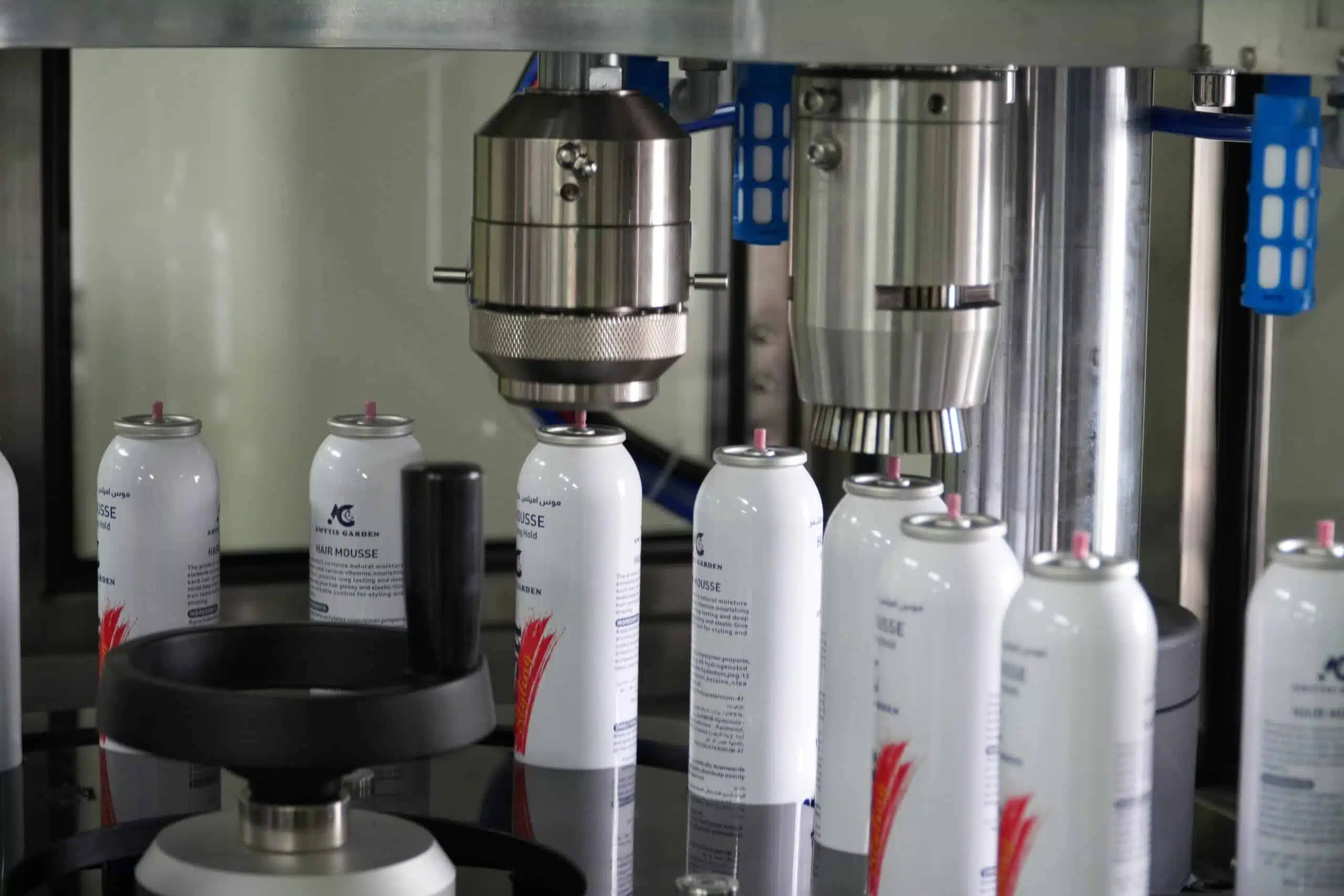
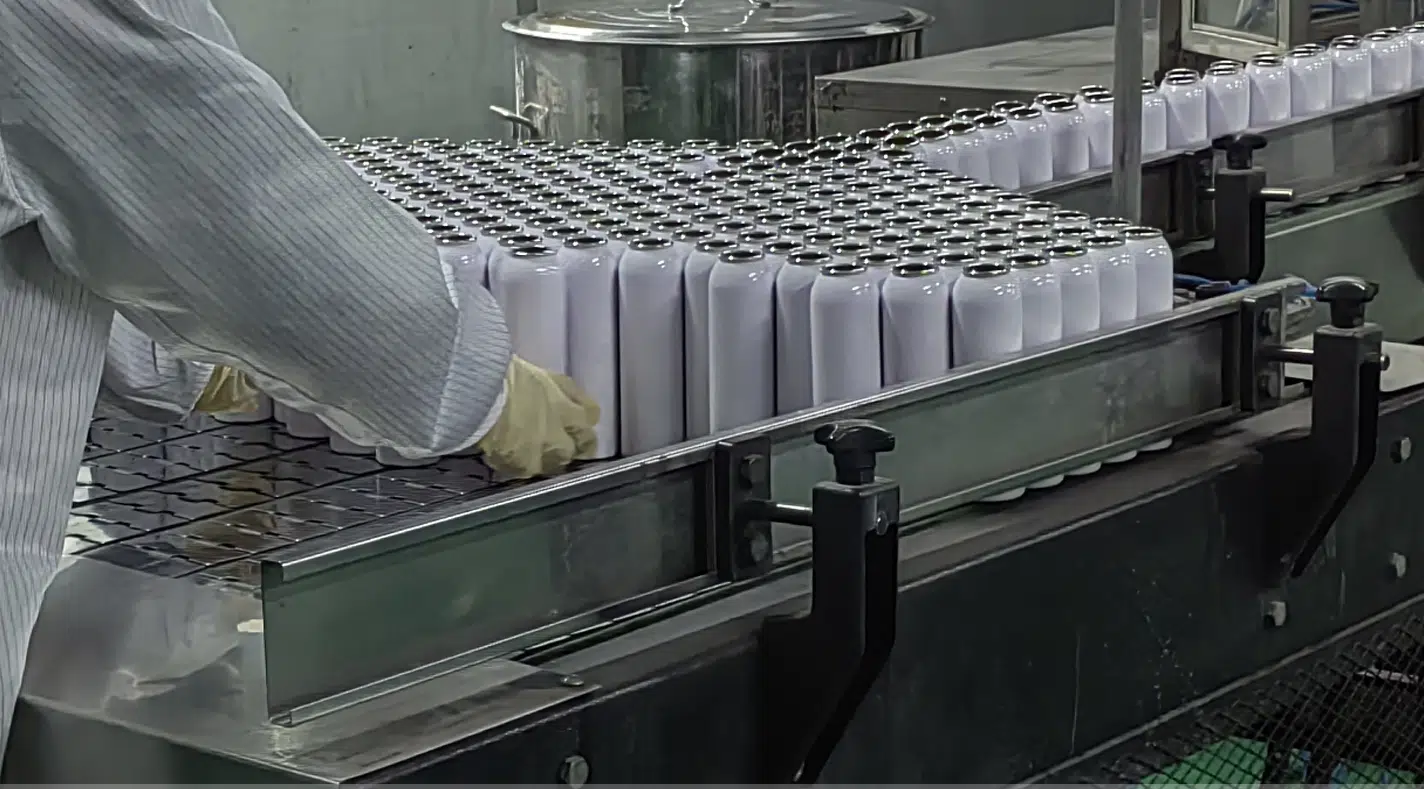
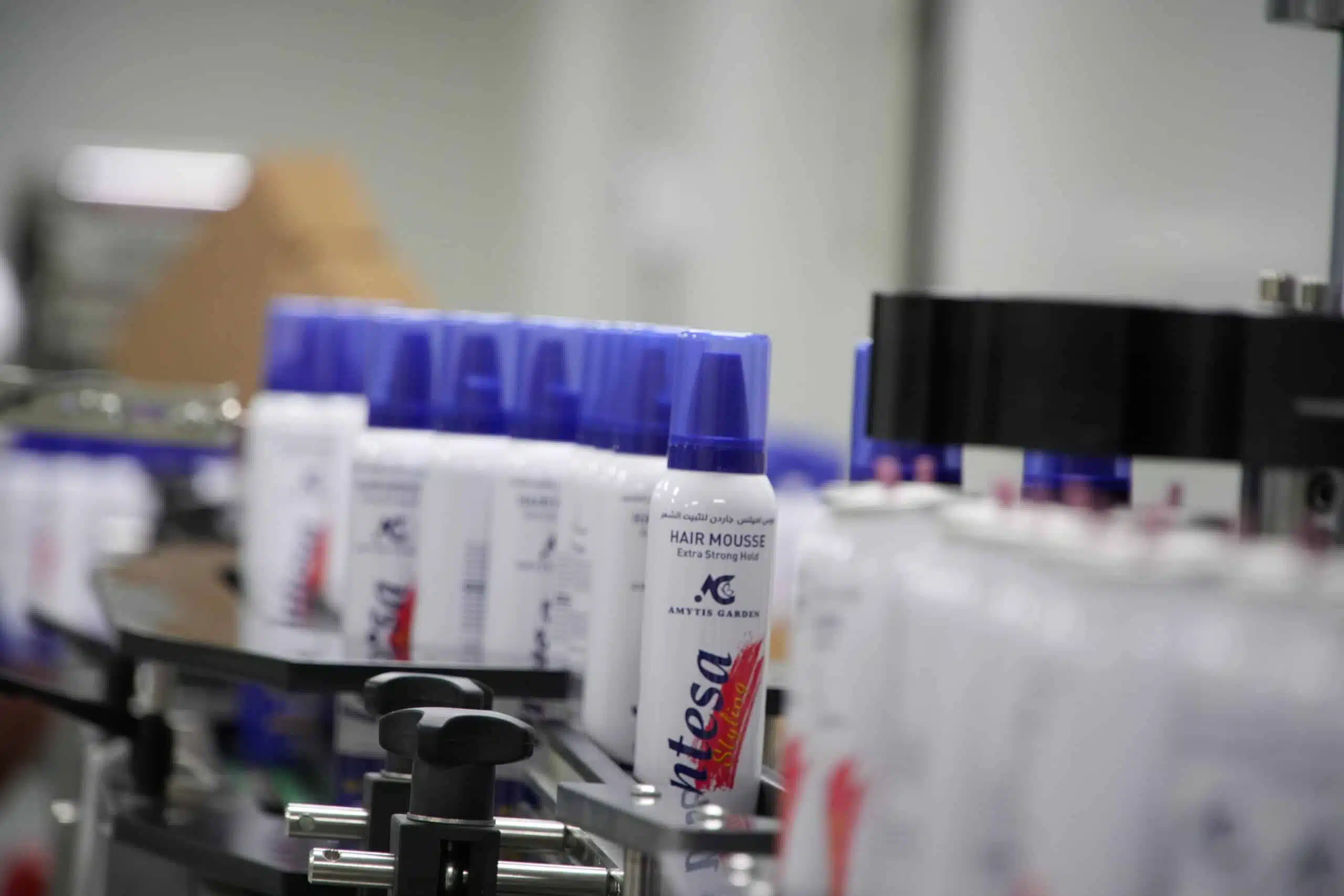
Container Filling: The empty aerosol container is filled with the prepared product concentrate. This is usually done using automated filling machines that ensure accurate and consistent filling.
Valve Crimping: について バルブ assembly is inserted into the opening of the container and crimped securely in place. This creates an airtight seal that prevents leakage of the 推進剤 and product concentrate.
Propellant Charging: について 推進剤 is added to the container through the バルブ. This can be done in two ways:
- Pressure Filling: について 推進剤 is added under pressure, forcing it into the container.
- Under-the-Cup (UTC) Filling: について 推進剤 is added to the container 以前 その バルブ is crimped in place. This method is often used for 液化ガス推進剤.
Testing and Quality Control: Step 5, along with other steps, involves rigorous testing. The filled エアゾール cans are tested for leaks, proper バルブ function, スプレー characteristics, and pressure. This ensures the product meets safety and performance standards.
Actuator and Cap Placement: について actuator and a protective cap are placed on the バルブ stem.
Labeling and Packaging: The cans are labeled with the product name, ingredients, instructions for use, and any necessary warnings. They are then packaged for distribution.
This entire process is typically carried out in a controlled environment to prevent contamination and ensure product consistency.
Manufacturing Methods:
について エアゾール industry has two main methods of filling aerosol containers that play an important role in ensuring the safety and quality of the 最終製品. Look at the two main methods for filling aerosols:
1. Cold Filling:
Process:
- The product concentrate is chilled to a very low temperature, typically below the boiling point of the 推進剤.
- The chilled concentrate is then filled into the aerosol container.
- について バルブ is crimped onto the container.
- について liquefied gas propellant, also chilled, is added through the バルブ.
- Because the concentrate and 推進剤 are cold, the 推進剤 remains in a liquid state during filling.
メリット
- Suitable for products that are sensitive to heat.
- Can be used with a wider range of 推進剤.
デメリット
- Requires refrigeration equipment, which can be expensive.
- Slower filling process compared to pressure filling.
- Not suitable for water-based products that might freeze.
2. Pressure Filling:
Process:
- The product concentrate is filled into the aerosol container at room temperature.
- について バルブ is crimped onto the container.
- について 推進剤 (either liquefied ガス or compressed ガス) is injected through the バルブ under high pressure.
- For liquefied ガス this pressure causes it to liquefy inside the aerosol container
- For compressed ガス, such as Nitrogen, CO2 and N2O, it remains a ガス.
メリット
- Faster filling process than cold filling.
- Does not require refrigeration equipment.
- Suitable for a wide range of products.
デメリット
- Not suitable for products that are sensitive to heat or pressure.
- May require a higher pressure 推進剤, which can increase the risk of can rupture.
Under-the-Cup (UTC) Gassing:
- UTC Gassing isn’t a method of filling エアゾール with product. UTC is a method of 推進剤 charging.
- Propellant is added to the can 以前 その バルブ is crimped in place. This requires specialized gassing equipment.
- Primarily used for flammable propellants.
- Used to obtain a very high propellant to product ratio.
The choice of filling method depends on several factors, including the type of product, the 推進剤 used, the desired スプレー characteristics, and production volume.
Quality Control in Aerosol Production
Quality control is paramount in aerosol production to ensure the safety, effectiveness, and consistency of the 最終製品. Rigorous testing is performed throughout the manufacturing process, from raw materials to finished goods. Here are some key quality control measures:
- 原材料の検査: All incoming raw materials, including the product concentrate ingredients, 推進剤, 溶剤, containers, and バルブ, are inspected to ensure they meet specifications.
- 工程内テスト: Samples are taken during the manufacturing process to check for proper mixing, filling, and 推進剤 charging.
- Leak Testing: Filled エアゾール cans are tested for leaks to ensure the integrity of the container and バルブ. This is often done using water baths or electronic leak detectors.
- スプレー Pattern and Rate Testing: について スプレー characteristics of the finished product are tested to ensure they meet the desired specifications. This includes measuring the スプレー pattern, スプレー rate, and 粒子径.
- Pressure Testing: The internal pressure of the エアゾール can is measured to ensure it’s within safe limits.
- Actuator Function Testing: について actuator is tested to ensure it functions properly and dispenses the product correctly.
- 安定性試験: Samples of the finished product are stored under various conditions (e.g., temperature, humidity) to assess their stability and shelf life.
- 微生物検査: For products that are susceptible to microbial contamination (e.g., エアゾール containing water), microbiological testing is performed to ensure they are free of harmful bacteria or fungi.
These quality control measures are essential for protecting consumers and ensuring that エアゾール products perform as intended.
Environmental Considerations: The Impact of エアゾール
The environmental impact of エアゾール has been a significant concern for many years, primarily due to the use of chlorofluorocarbons (CFCs) as 推進剤. CFCs were found to deplete the オゾン layer, which protects the Earth from harmful ultraviolet radiation.
As a result of international agreements like the Montreal Protocol, CFCs have been largely phased out and replaced with more environmentally friendly 推進剤などである:
- Hydrofluorocarbons (HFCs): While HFCs do not deplete the オゾン layer, they are potent greenhouse gases that contribute to climate change. Efforts are underway to phase down the use of HFCs as well.
- Hydrocarbons (e.g., プロパン, ブタン): These are more environmentally friendly than CFCs and HFCs, but they are 可燃.
- Compressed Gases (e.g., nitrogen, 二酸化炭素): These are generally considered to be environmentally benign.
In addition to the 推進剤, the environmental impact of エアゾール also depends on:
- The Product Concentrate: Some product concentrates may contain volatile organic compounds (VOCs) that contribute to air pollution.
- コンテナ: エアゾール cans are typically made of metal, which is recyclable. However, recycling rates vary, and some cans end up in landfills.
- The Manufacturing Process: Aerosol production can consume significant amounts of energy and water.
について エアゾール industry is continuously working to reduce its environmental footprint by developing more sustainable 推進剤, using recycled materials, and improving manufacturing processes. Using a combination of compressed ガス and hydrocarbon can lower flammability.
Innovations and Advancements in Aerosol Technology
Aerosol technology is constantly evolving, with ongoing research and development leading to new innovations and improvements. Some recent advancements include:
- Bag-on-Valve (BOV) Technology: This technology separates the product concentrate from the 推進剤 by placing the product in a bag within the can. The 推進剤 is filled into the space between the bag and the can, providing pressure to dispense the product. BOV offers several advantages, including:
- Reduced use of 推進剤.
- Ability to dispense the product at any angle.
- Better product preservation.
- Reduced need for preservatives.
- 新しい Propellant Formulations: Researchers are developing new 推進剤 that have lower global warming potential and are less 可燃.
- Improved Valve そして Actuator Designs: イノベーション バルブ そして actuator technology are leading to more precise スプレー control, reduced clogging, and improved user experience.
- Micro-sprays: Micro-sprays use very tiny nozzles and engineered particles.
- 持続可能な包装: エアゾール manufacturers are exploring the use of more sustainable packaging materials, such as recycled aluminum and plant-based plastics.
- Digital エアゾール: Some companies are developing digital エアゾール systems that use electronic controls to dispense precise amounts of product.
These advancements are making エアゾール more efficient, environmentally friendly, and user-friendly.
未来 Aerosol Production: Trends and Predictions
の未来 aerosol production is likely to be shaped by several key trends:
- 持続可能性: The demand for sustainable エアゾール products will continue to grow, driving the development of more environmentally friendly 推進剤, packaging, and manufacturing processes.
- パーソナライゼーション: Consumers are increasingly seeking customized products, and aerosol technology is adapting to meet this demand. Expect to see more personalized エアゾール products, such as custom-blended fragrances or hairsprays.
- Smart エアゾール: Digital エアゾール systems with electronic controls and connectivity will likely become more common, offering features like precise dosing, usage tracking, and automatic reordering.
- New Applications: Aerosol technology is being explored for new applications beyond traditional consumer products, such as drug delivery, medical devices, and industrial coatings.
- Focus on Safety: について エアゾール industry will continue to prioritize safety, with ongoing efforts to reduce the risk of can rupture, flammability, and exposure to harmful chemicals.
について エアゾール industry is poised for continued innovation and growth, driven by consumer demand, technological advancements, and a growing focus on sustainability.
Table of Propellants
| Propellant Type | 例 | メリット | Disadvantages |
|---|---|---|---|
| Liquefied Gas Propellants | Propane, Butane, DME | High delivery rate, good solvency, relatively inexpensive. | Flammable, contribute to VOC emissions. |
| Compressed Gas Propellants | Nitrogen, Carbon Dioxide | Non-flammable, environmentally friendly, consistent pressure. | Lower delivery rate, may require higher pressure, can be more expensive. |
| Hydrofluorocarbons (HFCs) | HFC-134a, HFC-152a | Non-flammable, do not deplete the ozone layer. | Potent greenhouse gases. |
| Chlorofluorocarbons (CFCs) | CFC-11, CFC-12 | Non-flammable, good solvency (Historically Used, largely banned). | Deplete the ozone layer (largely phased out due to international agreements). |
Table of Aerosol Production Steps
| ステップ | 説明 | Key Considerations |
|---|---|---|
| Concentrate Preparation | Mixing active ingredients with solvents, stabilizers, and other additives. | Homogeneity, stability, compatibility of ingredients. |
| Container Filling | Filling the empty aerosol container with the prepared product concentrate. | Accuracy, consistency, avoiding contamination. |
| Valve Crimping | Inserting and securely crimping the valve assembly onto the container. | Airtight seal, proper valve function. |
| Propellant Charging | Adding the propellant to the container through the valve (pressure filling) or before valve crimping (UTC). | Safety, accurate propellant amount, proper mixing with concentrate. |
| Testing & Quality Control | Testing for leaks, valve function, spray characteristics, and pressure. | Meeting safety and performance standards, identifying and rejecting defective units. |
| Actuator & Cap Placement | Attaching the actuator and a protective cap to the valve stem. | Proper fit, functionality, preventing accidental discharge. |
| Labeling & Packaging | Labeling cans with product information and packaging for distribution. | Compliance with regulations, clear and accurate labeling, protection during shipping and storage. |
10 Key Things to Remember About Aerosol Production
- アン エアゾール is a suspension of fine solid particles or liquid 液滴 での ガス.
- エアゾール systems typically consist of a container, product concentrate, 推進剤, 溶剤そして valve and actuator.
- 推進剤 provide the pressure to expel the product and create the スプレー.
- Liquefied gas propellants vaporize when the バルブ is opened, while compressed gas propellants remain gaseous.
- について valve and actuator control the release of the product and determine the スプレー characteristics.
- について aerosol production process involves several steps, including concentrate preparation, container filling, バルブ crimping, 推進剤 charging, testing, and packaging.
- Quality control is crucial to ensure the safety, effectiveness, and consistency of エアゾール 製品である。
- について エアゾール industry is working to reduce its environmental impact by using more sustainable 推進剤 and packaging.
- イノベーション aerosol technology include bag-on-valve systems, new 推進剤 formulations, and improved バルブ そして actuator designs.
- の未来 aerosol production will likely be shaped by sustainability, personalization, smart エアゾール, and new applications.




中国で信頼できる化粧品OEMメーカーを選ぶ方法?
中国で良いメイクアップメーカーを選ぶ方法:あなたのためのガイド。
あなたは概念を持っています。
新しいフェイスクリーム。新しいヘアスプレー。新しいネイルカラー。
髪の毛染めを肌から落とす方法:必要な唯一のガイド
こんな感じを想像してください。
あなたは髪の毛を染めました。新しい色を使いました。それは素晴らしい見た目です。あなたの髪は光っています。あなたは幸せを感じています。あなたは新しい人のように感じます。

 EN
EN  DE
DE  RU
RU  ES
ES  KO
KO  FR
FR  JA
JA